
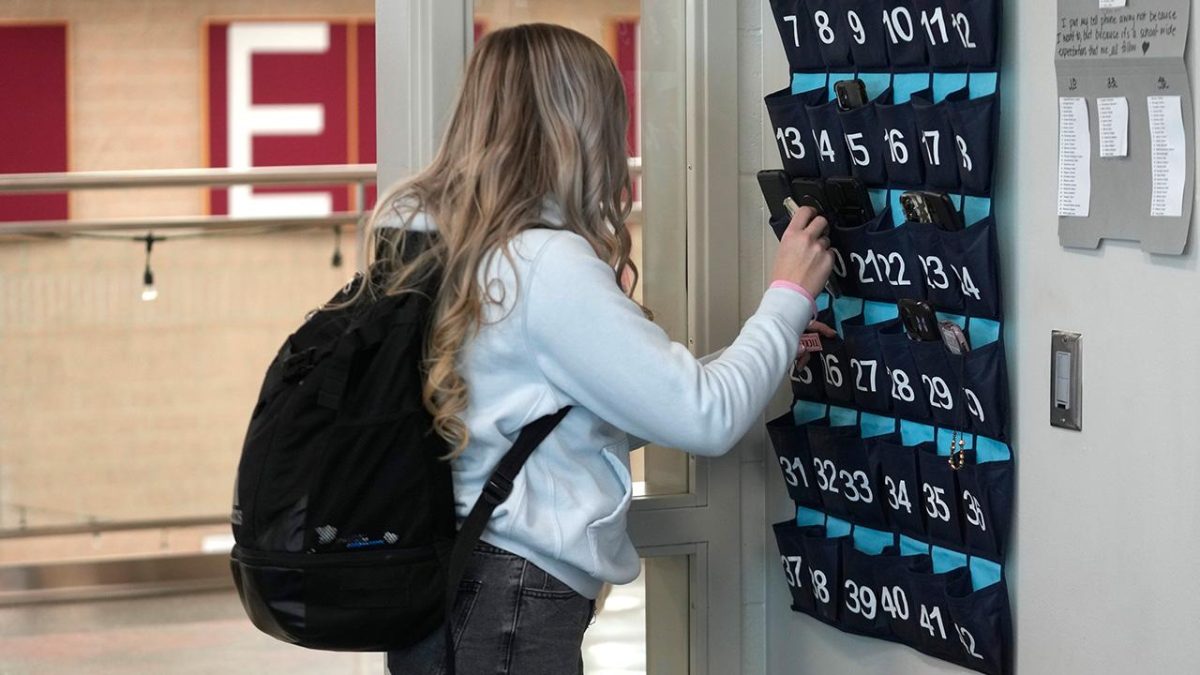
In this article, I will discuss how our school’s phone ban system could be improved because, in its current form, it is flawed and does not effectively prevent students from using their phones.
Why the Current System Is Flawed
Our current system is flawed because it is relatively easy to bypass. All it takes is a simple bait-and-switch. Students can show their phone pouch to a vice principal or school security officer while keeping their actual phone hidden. As a result, staff members may believe the student has complied with the policy when they have not.
If a student is caught with a phone, however, the consequences can be severe. The phone is taken away, and a parent or guardian must come to school to retrieve it. In addition, the current system often creates long lines in the morning as students enter the building.
How the System Could Be Improved
One way to improve the policy would be to use a more effective method of detecting phones. The phone pouches currently used do not always prevent students from bringing or using their phones during the school day. As mentioned earlier, students can simply place their phone in a backpack, show an empty pouch to school staff, and then use the phone later.
The consequences for violating the policy could also be adjusted. Currently, when a student is caught with a phone, it is confiscated until a parent or guardian comes to pick it up. While this may discourage some students from bringing their phones to school, the punishment can be difficult for families whose parents or guardians are unable to come to the school during work hours.
Instead, if a student is caught using a phone, the device could be confiscated for the remainder of the school day. The student could then retrieve it from the main office at dismissal. This consequence would still discourage phone use while being more practical for families.
Conclusion
The goal of the phone ban is to reduce distractions and help students focus on learning. However, the current system is easy to bypass and can create unnecessary inconveniences for students and parents. By improving enforcement methods and creating more reasonable consequences, the policy could become both more effective and more practical.