Background
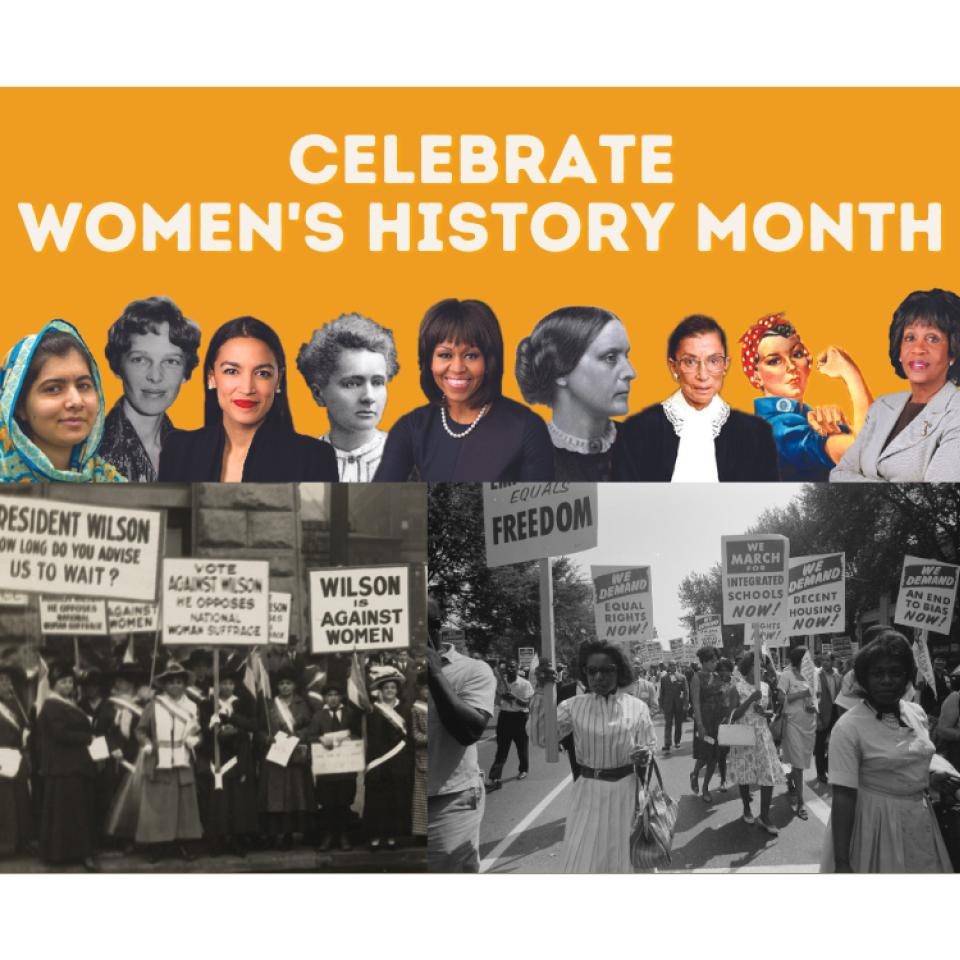
Did you know that women have contributed to every aspect of history, from science and politics to art and activism, often without receiving the recognition they deserve? March is a special time to celebrate their incredible achievements.
Did you know that Women’s History Month started as Women’s History Week? According to the National Women’s History Alliance:
“Women’s History Month began as a local celebration in Santa Rosa, California. The Education Task Force of the Sonoma County (California) Commission on the Status of Women planned and executed a ‘Women’s History Week’ celebration in 1978. The organizers selected the week of March 8 to correspond with International Women’s Day. The movement spread across the country as other communities initiated their own Women’s History Week celebrations the following year. In 1980, a consortium of women’s groups and historians—led by the National Women’s History Project (now the National Women’s History Alliance)—successfully lobbied for national recognition. In February 1980, President Jimmy Carter issued the first Presidential Proclamation declaring the week of March 8, 1980, as National Women’s History Week.”
There is also an important date in women’s history during March. According to the same source:
“March 3 is historically significant in women’s history because of the 1913 Woman Suffrage Procession in Washington, D.C., a massive parade led by Alice Paul and Inez Milholland that brought the fight for women’s right to vote to national attention. It occurred the day before Woodrow Wilson’s inauguration and became the first major political march in Washington, D.C., leading to congressional hearings and increased visibility for the suffrage movement.”
Present Day
Today, many women continue to shape history through their hard work, leadership, and achievements. They serve as role models for younger generations and inspire people around the world.
According to the Victoria and Albert Museum:
“Top women in history include trailblazers like Marie Curie (first woman to win a Nobel Prize), Rosa Parks (civil rights icon), Amelia Earhart (aviation pioneer), and Harriet Tubman (abolitionist). Other key figures include leaders like Cleopatra and Margaret Thatcher, activists like Susan B. Anthony and Malala Yousafzai, and scientists like Ada Lovelace.”
The museum also highlights important historical figures and groundbreaking achievements in women’s history:
Key Historical Figures in Women’s History
Science & Technology
- Marie Curie (radioactivity)
- Ada Lovelace (first computer programmer)
- Jane Goodall (primatologist)
Civil Rights & Activism
- Harriet Tubman (abolitionist)
- Rosa Parks (civil rights activist)
- Susan B. Anthony (suffragist)
- Malala Yousafzai (education activist)
Politics & Leadership
- Cleopatra (Pharaoh of Egypt)
- Queen Elizabeth I
- Eleanor of Aquitaine
- Margaret Thatcher (first female Prime Minister of the United Kingdom)
- Indira Gandhi
Aviation & Exploration
- Amelia Earhart (first woman to fly solo across the Atlantic Ocean)
Literature & Arts
- Frida Kahlo (artist)
- Sor Juana Inés de la Cruz (poet)
Important “Firsts” in Women’s History
- Sally Ride (1983): First American woman in space
- Sandra Day O’Connor (1981): First female U.S. Supreme Court Justice
- Madeleine Albright (1997): First female U.S. Secretary of State
- Kamala Harris (2021): First female Vice President of the United States
- Emmeline Pankhurst: Leader of the British suffragette movement
Modern Women Making History
One modern example is Malala Yousafzai, a Pakistani activist for girls’ education and a producer in film and television. She became an advocate at a young age, blogging for the BBC about life under Taliban rule in her hometown of Swat Valley, where girls were often denied access to education.
Why Women’s History Month Matters
The main message of Women’s History Month is that women should be respected and valued throughout the entire year, not just for one month. Throughout history, many women faced discrimination in education, employment, and society simply because of their gender. Despite these challenges, they continued to make significant contributions that shaped the world we live in today.
As Maya Angelou once said:
“Each time a woman stands up for herself, without knowing it possibly, without claiming it, she stands up for all women.”
Women’s History Month reminds us to celebrate those achievements and continue working toward equality and opportunity for everyone.