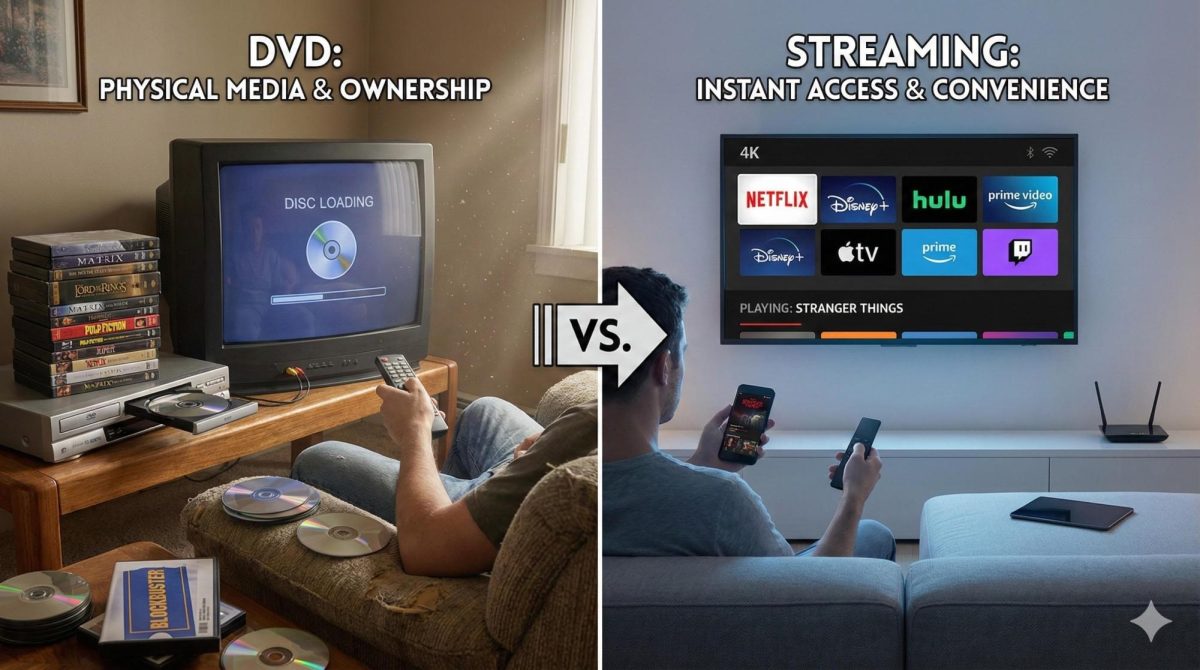
Your friends are talking about a movie. You haven’t seen it, but you want to watch it. The problem is that it hasn’t been in theaters for more than 10 years. The only ways to watch it are to find it on a streaming service or buy the DVD or Blu-ray. Which should you choose?
Today’s topic is physical media versus digital media in movies, video games, TV shows, and more to determine which option might be best for you.
The Advantages of Physical Media
Physical media was the main way people watched movies and TV shows until the 2010s. DVDs were common in many households, and later Blu-rays were introduced in 2006. Both formats are still being produced today.
What are some advantages of physical media?
First, when you buy a movie or TV show, you actually own it. Depending on the title, you may also get bonus features such as behind-the-scenes footage, audio commentaries, deleted scenes, and interviews.
Many television shows are available in complete-series DVD or Blu-ray collections, making it easy to own every season with a single purchase. You only have to pay once.
Physical media is also one of the best ways to achieve theater-like picture quality at home, especially with 4K Ultra HD discs.
Collectors often enjoy the artwork and presentation of physical releases. Some special editions include unique packaging, artwork, booklets, or collectibles.
Even DVD and Blu-ray menus can be fun and creative, especially on older releases that featured interactive animations and music.
In conclusion, DVDs, Blu-rays, and 4K discs provide a fun and reliable way to watch movies and TV shows while offering excellent picture quality and bonus content.
The Advantages of Digital Media
Digital media first appeared in the 1950s but did not become mainstream until the rise of the internet in the 1990s.
Today, digital media has become the primary way many people watch movies and television.
What are some advantages of digital media?
The biggest advantage is convenience. You can purchase or stream a movie instantly with just a few clicks.
Streaming services offer thousands of movies and shows in one app, including exclusive content that may only be available on that platform.
You may even discover new movies and TV shows that you would not have found otherwise.
Many streaming services provide access to large libraries of content for a monthly subscription fee.
There are also free streaming services available online.
Digital media does not take up physical space in your home. There is no need to store cases, shelves, or a DVD player.
For video games, digital services also make it easier to play online with friends.
Overall, digital media is a convenient and accessible way to enjoy entertainment.
The Disadvantages of Both
Both physical and digital media have drawbacks.
Physical Media
- You need a player that can read the disc format, which can be expensive.
- Some DVDs and Blu-rays become rare and can cost much more than their original price.
- Discs can become scratched or damaged over time.
- Cases and collections require storage space.
Digital Media
- Streaming services require ongoing monthly payments.
- If you stop paying for a subscription, you lose access to the content.
- Streaming services can increase prices over time.
- Movies and TV shows can be removed when licensing agreements expire.
- Most streaming platforms lack the bonus features found on physical releases.
- Digital media requires a reliable internet connection.
- Streaming services may experience buffering, crashes, or technical issues.
Librarian Interview
For this article, I spoke with the high school librarian and gathered some additional thoughts.
Digital Positives
- You can sometimes access movies earlier than physical releases.
Digital Negatives
- Requires internet access.
- Streaming services may crash or buffer during a movie.
Physical Negatives
- Many students do not own a DVD or Blu-ray player.
- Some formats may become outdated over time.
- Library copies must be returned.
Conclusion
In the end, there is no single correct choice. Whether you choose physical media or digital media depends on your personal preferences. Physical media offers ownership, bonus features, and excellent quality, while digital media provides convenience and accessibility.
What matters most is understanding your options and choosing the one that works best for you.