Who was Renee Good?
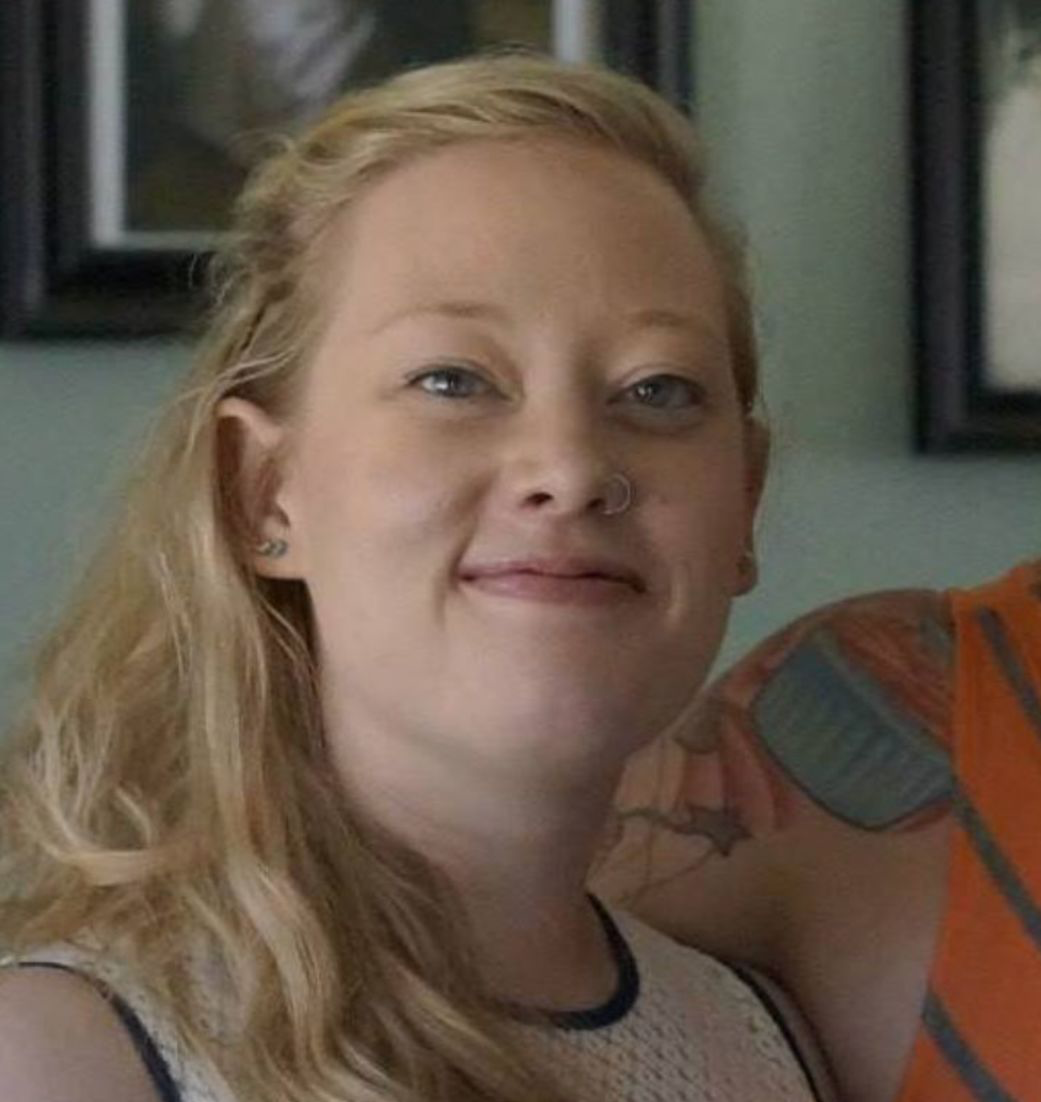
Renée Nicole Macklin Good was a 37-year-old U.S. citizen, who lived in Minneapolis with her partner and six-year old child, from a previous marriage. She was a writer and a poet, originally from Colorado Springs, Colorado, who graduated with a degree in English from Old Dominion University. According to her neighbor, Good previously lived in Kansas City, Missouri, before relocating to Canada along with her partner and family following Trump’s victory in the 2024 U.S. presidential election. She later moved to Minneapolis. Good had been married twice, with her first marriage being from 2009 to 2016 where she had two children; in her second marriage she had a single child, however her second husband died in 2023 at the age of 36.
What is ICE?
For those who don’t know, ICE is officially the Immigration and Customs Enforcement, a primary U.S. federal law enforcement agency held under the Department of Homeland Security (DHS), formed in 2003. ICE aims to protect the U.S. from cross-border crime and illegal immigration, with a focus on public safety and national security. As a part of President Donald J. Trump’s administration’s sweeping deportation efforts during his second presidency, ICE agents have been increasingly involved in violent confrontations with migrants and U.S. citizens as a part of the agency’s shift towards a more aggressive immigration enforcement. Recently, on January 6, the DHS announced the largest immigration enforcement operation ever carried out sending over 2,000 agents to the Minneapolis-Saint Paul metropolitan area. The surge included a series of Homeland Security Investigators officers focused on suspected fraud. Good’s killing was the ninth time in five states that ICE agents had opened fire on people since September 2025. An eyewitness to the shooting said, “People in our neighborhood have been terrorized by ICE for six weeks”. Four other people have been killed during federal deportation operations.
What led to the Incident?
Johnathan Ross, an ICE agent, shot Renée Good on Portland Avenue between East 33rd and 34th Streets in the Central neighborhood of Minneapolis, a few blocks from Good’s home.
The event began when several ICE officers were travelling to their headquarters when their vehicle became stuck in snow, requiring backup to arrive. A resident nearby claims that neighbors were standing guard to the ICE agent’s activity as students were being dropped off at a dual-language elementary school around the corner. Secretary Noem claimed that Good had been “stalking and impeding ICE all day” prior to the shooting. In addition, various state officials and representatives alleged that Good was acting as a “legal observer” of the ICE agents activities at the time of the incident. In fact, both her mother and ex-husband stated that they did not believe that she had previously taken part in protests challenging ICE’s activities. According to her ex-husband, she had dropped her son off at school, around seven minutes away, and was on her way home when she came upon the group of ICE agents.
At 9:35, Good’s SUV was stopped sideways leftward on the one-way Portland Avenue. Jonathan Ross drove his SUV around, stopped ahead of her, and began to record a video. Ross walked towards Goods SUV, with his face covered while recording her and her rear license plate. At 9:36, Good’s partner, Becca, stood behind their SUV, also recording on her cell phone and stated, “Show your face. That’s okay. We don’t change our plates every morning, just so you know. This will be the same plate when you come talk to us later. That’s fine. U.S. citizen, former ******* veteran”. As both Good and Becca continued, a Nissan Titan stopped to the left side of her SUV and two more ICE agents stepped out.
By 9:37, the incident escalated with the ICE agents yelling conflicting orders towards Good, stating to drive away while others shouted at her to exit the SUV. Then the ICE agents approached Good’s SUV with one repeatedly ordering her to “get out of the ******* car”. Good remained inside her vehicle and put the transmission into reverse.
Then a number of events ensued nearly simultaneously: One of the ICE agents who approached her placed his hands on the driver’s door handle and opened the window of Good’s vehicle. Becca then attempted to open the front passenger door of the Honda Pilot SUV while Good drove a few feet in reverse. Ross then walked to the front-left of Good’s vehicle.
The agent at the driver’s door then reached through the open window, and Becca shouted to Good, “Drive, baby, drive!”. Good then began to derive forward while turning to the right and away from Ross, the correct direction of traffic on the one-way street.
Shooting
Keeping his phone in his left hand, Ross drew his gun, leaned forward and fired three shots at Good in her departing SUV in under one second, all shots hitting her. According to a video analysis by The New York Times and ABC News, Toss fired the first shot at the SUV’s windshield and the second and third shots through the vehicle’s driver’s side window.
Post-Shooting
After the shooting, the SUV continued down the street until it crashed into a parked car and light pole. As it did so, Ross was captured yelling a series of curses towards the vehicle. Ross then approached the crashed SUV and then returned to his colleagues telling them to call 911, and remained on the scene for more than a minute. A nearby resident and witness states that after hearing Good’s SUV, he went outside and saw Becca Good “covered in blood” and sitting in front of the building, crying, “You guys just killed my wife”.
A close bystander then attempted to provide medical care for Good, however ICE agents blocked them stating, “No, back up now!”. Despite the bystander stating that they were a physician. Another agent stated that Emergency Services were arriving, and another stated that they had their own medical team on scene.
At 9:43, six minutes after the first shot was fired, Emergency Services and firefighters arrived and began to remove Good from her vehicle and attempt aid. The New York Times obtained records showing that Good had an irregular pulse when the emergency workers arrived, and a short time later, had no pulse.
Good had three gunshot wounds: one in the chest, one in the forearm, and one in the head. Her pupils were dilated and blood was pouring from her ear. By 9:45, Good was carried out to Portland Avenue and 34th Street, where she began receiving CPR, just eight minutes after being shot. She was then taken to Hennepin County Medical Center, where she was officially pronounced dead.
Her dog in the back seat of the car remained unharmed in the end.
Autopsy
A private autopsy determined that the two of the three gunshot wounds on the 37-year-old’s body, two of which were not immediately life-threatening. One struck her left forearm, and the other entered her body through her right breast, despite this neither struck major organs. A third shot struck her on the left side of her head near her temple and then exited on the right side of her head.
The Good’s family attorneys Romanucci and Blandin, who are part of the same firm who represented George Floyd’s family after his murder, declined to release the full report, due to “gathering evidence” in connection with her death as they pursue a civil investigation
Investigation
On January 8, the head of the Minnesota Bureau of Criminal Apprehension disclosed that the Federal Bureau of Investigation (FBI) had revoked their access to evidence of the shooting, reversing an earlier agreement to have a joint investigation.
Minneapolis’s chief county prosecutor Mary Moriarty said her office was “exploring all options to ensure a state investigation can continue”. On January 9, she and the Minnesota attorney general, Keith Ellison, asked residents, through The Wall Street Journal, “videos, photos, and eyewitness accounts of the shooting and the events leading up to it”. Officials stated that it was too early to tell if enough evidence had been gathered to decide whether to charge the shooter.
ICE policy requires agents to wear active body cameras to record enforcement and interactions for review in serious incidents. Various sources throughout the 8th and the 9th of January had conflicting information regarding whether or not Ross was wearing the body-worn cameras.
On January 12, the New York Times reported that in addition to investigating Ross;s actions, federal investigators at the FBI and Department of Justice (DOJ) were also tasked with analyzing any connections that Good might have had to do with activist groups protesting Trump’s immigration policies. In addition, according to the New York Times, former U.S. Attorney Joseph H. Thompson and five other federal prosecutors in Minnesota resigned their positions due to “the Justice Department’s push to investigate the widow of Renée Good and the department’s reluctance to investigate the shooter”.
Daniel N. Tosen, U.S. Attorney for Minnesota and Trump appointee, sent an internal email instructing the prosecutors to “say nothing” to law enforcement and the media about Good’s killings. Additionally, the U.S. Deputy Attorney General Todd Blanch stated on Fox News that the Department of Justice would not be opening a criminal investigation into Ross for his killing of Good.
Aftermath
Minneapolis Public Schools (MPS) cancelled class for the remainder of the week, citing safety concerns after the shooting and ICE’s use of pepper spray and pepper balls against students at Roosevelt High School. Faculty at the high school stated that the armed ICE agents had handcuffed two members of the staff. On January 9, the Minneapolis Public Schools announced that they will be offering the option of remote learning until February 12.
An online fundraiser campaign started by Good’s family was closed on January 9 after reaching more that $1.5 million in donations. The family later stated that all the money would be placed in a trust fund for the family. In response to the fundraiser for Good, a fundraiser was established for the shooter by Clyde Emmons of Mount ZForest Michigan, by January 12, this campaign raised $375,000. Another online fundraiser for Ross was made with the target of $200,000.
This killing brought renewed attention to the many other incidents of killings and aggressive attacks by immigration agents. One of which only occurred a week earlier when an off-duty ICE officer fatally shot Keith Porter Jr.
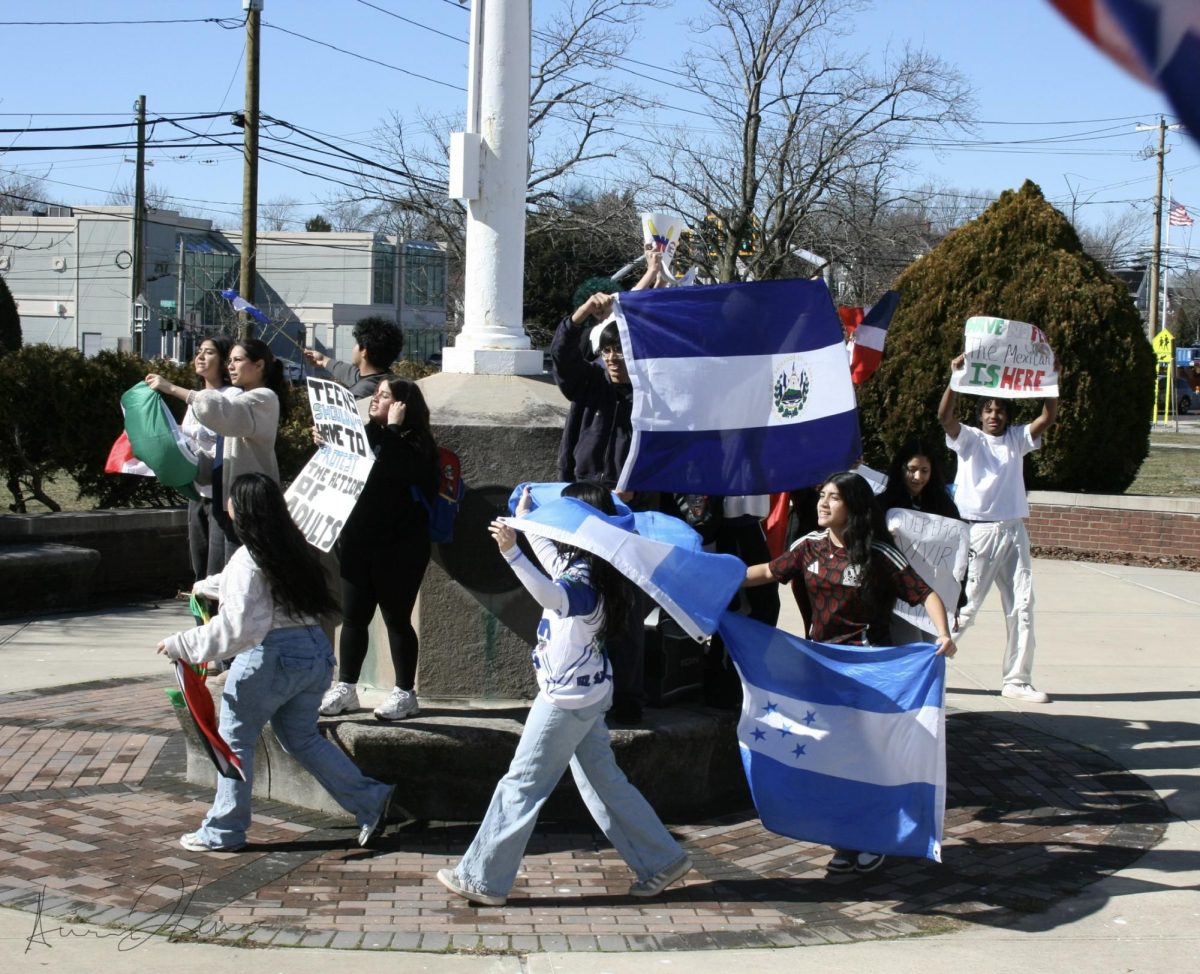
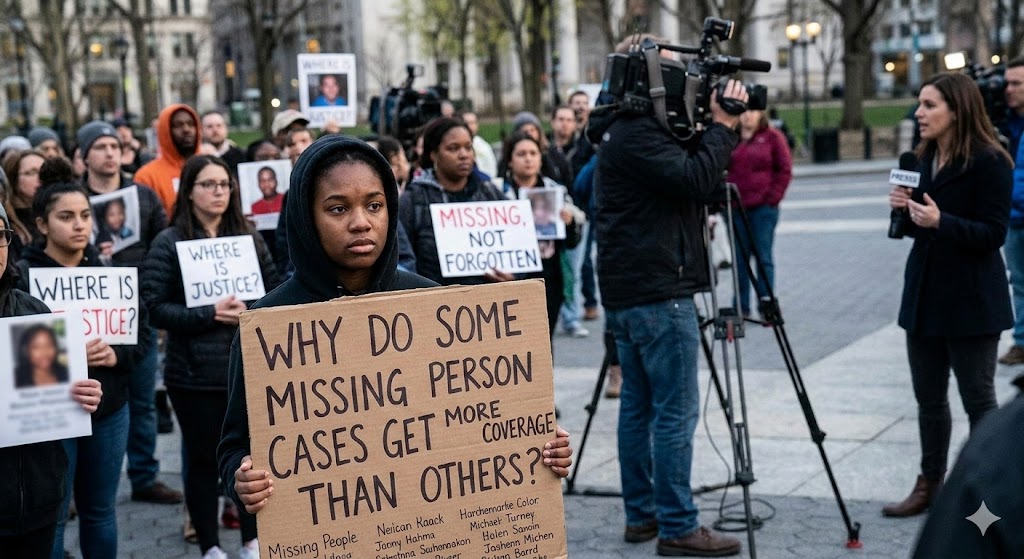
Protests have also arisen worldwide, one where a crowd of people barricaded the street in Minneapolis where Good was killed to hold a vigil in her memory.
Who was Johnathan Ross?
Johnathan Ross is the identified ICE agent involved in Renée Good’s fatal shooting. Ross had been married twice, his first marriage beginning shortly before his deployment to Iraq and ended in a divorce before he returned. He later remarried in 2015, 8 years after graduating with a degree in business administration from Anderson University.
He served in the Indiana National Guard from 2002 to 2008, and was a machine gunner in the Iraq War from 2004 to 2005. He also worked for the U.S. Border Patrol from 2007 to 2015. Officially he started with ICE in 2016, first working in the Enforcement and Removal Operations unit of ICE at the time after the shooting.
Works Cited
Luscombe, Richard. “Renee Good Was Shot Three Times, Autopsy into Minneapolis ICE Killing Finds.” The Guardian, The Guardian, 22 Jan. 2026, www.theguardian.com/us-news/2026/jan/22/renee-good-autopsy-ice-minneapolis?utm_source=chatgpt.com.
““Killing of Renée Good.” Wikipedia: The Free Encyclopedia, 23 Jan. 2026, en.wikipedia.org/wiki/Killing_of_Renée_Good. Accessed 23 Jan. 2026.