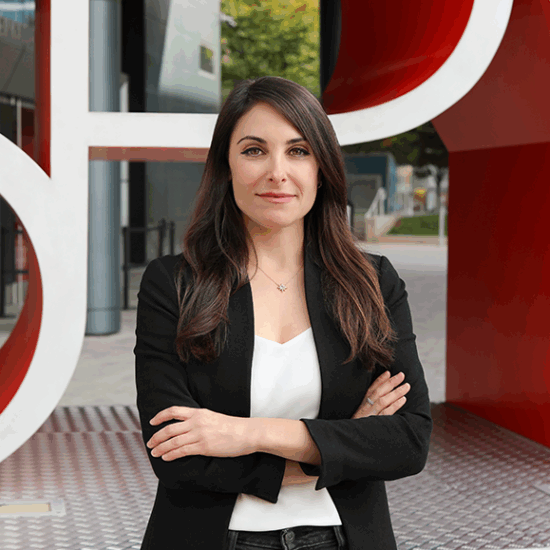
In July 2025, during the Washington Journalism and Media Conference, I had the opportunity to meet Sasha Ingber, a national security journalist whose work has taken her into some of the most challenging international environments. During her presentation, she spoke about her journey, how she began with smaller assignments and slowly built her way into covering global crises, intelligence operations, and stories unfolding across Ukraine, the Middle East, Bangladesh, Cuba, and more. Hearing her speak set the tone for what foreign journalism truly looks like behind the scenes. In October, I had the honor of interviewing her more closely, which gave me an even deeper understanding of the world she reports from.
As we spoke, Ingber described how reporting from conflict zones or unstable regions requires more than skill; it requires emotional and mental grounding before stepping into the field. She stressed the importance of having a strong support system while traveling and having another one ready when returning home. “You come back carrying heavy weight sometimes,” she said, explaining how common it is for journalists to internalize the pain they witness. She shared that she, too, has been affected by the things she has seen and heard, and that these experiences have changed her. Even so, she noted that change isn’t always negative; sometimes it’s simply the reality of doing meaningful, difficult work.
When discussing political and cultural barriers, Ingber explained that these challenges often appear in unexpected ways. Traveling as an American and as a Caucasian woman shapes how people interact with her. In Iraq, she noticed that men were more willing to
speak with her than they might be with locals, which created an unusual advantage. Yet at the same time, she faced serious obstacles. Because she reports for an American audience, she has the rare freedom of knowing her work can be published without censorship. But that freedom did not protect her from being followed by intelligence and security services tied to different political parties during one of her trips to Iraq, a moment she described as “unique” and deeply memorable.
Language also affects the pace and process of reporting. Ingber explained that working with a fixer means relying heavily on them for interpretation, clarity, and accurate translation. Cultural expectations can add another layer. In some places, certain men may not want to sit with her or even shake her hand. Still, she shared that these same cultural moments can shift in unexpected ways. Sometimes people are surprised to see her leading a reporting trip, and that surprise can make them open up, offering stories they might never share with someone else.
Fixers themselves are a crucial part of foreign journalism. Ingber described how their responsibilities can range from developing stories, locating sources, and translating interviews, to even driving reporters safely from place to place. The role changes depending on the country and the situation, but one thing remains constant: choosing the right fixer is essential. She mentioned “haunting stories” of fixers who have, wittingly and unwittingly, betrayed journalists or placed them in danger, which is why reporters must be extremely careful about who they trust.
For students who dream of becoming foreign correspondents or war correspondents, Ingber offered clear advice. She said that having someone who understands the ground, someone with local familiarity, is more valuable than simply learning a language. Knowing the landscape and the people, she explained, reaches far beyond vocabulary or grammar.
Despite the risks, Ingber spoke about the moments that remind her why the work matters. One moment in particular stayed with her. In Iraq in 2016, she met a Syrian woman who didn’t speak English. While her interpreter was inside the house, Ingber smiled at the woman and offered a hug. The woman held onto her tightly, crying into her shoulder while repeating “Daesh, Daesh” – “ISIS, ISIS.” She wouldn’t let go, and they stayed like that for minutes. It was a moment that showed the human side of conflict, the grief, fear, and emotion that rarely make it into headlines.
Through experiences like this, Ingber has learned that people across the world share similar hopes, to be heard, to be seen, and to want a better future for their children. The common threads have shaped how she views empathy and storytelling, and they influence how she brings attention to voices that might otherwise go unnoticed. She hopes her reporting has made a real impact on American audiences, especially knowing how much risk and effort goes into gathering these stories. As she put it, there is “no substitute to stepping on the soil yourself.”
For young journalists, especially those just beginning their journey, Ingber offered a final piece of advice. Journalism, she said, remains a pillar of democracy and will always have a purpose. The work is not always easy, and journalists are not always liked, but the importance of their role never fades. To anyone entering the field of journalism, her message is simple and firm: “Never give up.”